Christmas Traditions With Your Baby: Magical Memories That Grow With Your Child

Cradle of Nutrition
- 10 minutes read
Christmas is a magical time of year, filled with twinkling lights, familiar songs, delicious treats and special moments with the people we love. But when you have a baby, Christmas takes on a whole new meaning. Suddenly, even the smallest things become precious: your baby’s first Christmas outfit, tiny hands reaching for sparkling decorations, or the wonder of watching the Christmas tree lights for the very first time.
It is also the perfect time to start creating Christmas traditions that your family can enjoy year after year.
The beautiful thing about family traditions is that they don’t have to be grand, expensive or complicated. In fact, the simplest activities often become the most meaningful memories. A special Christmas book, homemade decorations, a festive breakfast or an annual family photograph can grow into traditions your children look forward to every December.
Christmas is also a wonderful opportunity to introduce your little one to the feelings and experiences that make this season so special. The familiar songs, warm lights, family gatherings and little rituals all help create a sense of comfort, excitement and belonging. There is actually more behind our love of Christmas than we might realise. Discover The Psychology Behind Christmas and explore why this magical season creates such powerful emotions and lasting memories.
Whether you are celebrating your baby’s first Christmas or looking for new ways to make the festive season special for your growing family, here are some lovely Christmas traditions to start today and enjoy for many years to come.
1. Start With a Special First Christmas Tradition
Your baby’s first Christmas is a milestone you will never experience in quite the same way again. Although your little one may not remember it, you certainly will!
This is a wonderful opportunity to introduce a few simple traditions that can become part of your family’s Christmas celebrations.
You could:
- Buy a special Christmas ornament with your baby’s name and birth year.
- Take a festive family photograph every year.
- Choose a beautiful Christmas book to read together.
- Dress your baby in a cute Christmas outfit for a special family moment.
- Create a small memory box with photographs, a Christmas card and other keepsakes.
One particularly lovely idea is to buy a new Christmas ornament for your child every year. Start with their first Christmas and continue as they grow. Eventually, decorating the Christmas tree becomes a journey through your family’s memories.
Imagine your child looking at those ornaments years later and remembering the Christmases they represent. Isn’t that a lovely thought?
2. Make Reading a Christmas Tradition
There is something special about cuddling up with your little one and reading a Christmas story.
Even when your baby is too young to understand the words, they can enjoy the sound of your voice, the colourful pictures and the cosy atmosphere.
Choose one Christmas book and make it your family’s special December bedtime story. Read it throughout the festive season, perhaps before bedtime or after breakfast.
As your baby grows into a toddler, they can start pointing at the pictures, recognising familiar characters and repeating little phrases. Later, they may even be able to read the story to you!
Reading to your baby is also a wonderful way to introduce language, connection and a love of books from the very beginning. The sound of your voice, the rhythm of language and the colourful pictures all contribute to an enriching early learning experience.
To discover why this simple activity is so valuable, read our article The Power of Reading to Newborns and Toddlers.
You can also introduce a small Christmas book collection, adding one new book every year.
3. Create Christmas Decorations Together
Decorating the Christmas tree is one of the most loved Christmas traditions. Why not make it even more special by creating some decorations together?
When your baby is very small, you can make a personalised ornament using their first Christmas photograph or a handprint or footprint keepsake.
As your child grows, get them involved in making simple decorations.
Some fun ideas include:
- Paper snowflakes.
- Salt dough Christmas ornaments.
- Handmade Christmas cards.
- Painted wooden decorations.
- Paper chains and colourful garlands.
- Personalised tree decorations with their name and year.
Toddlers will love choosing colours, sticking shapes and getting a little messy along the way.
Older children can take the lead and make decorations for grandparents, friends and other family members.
Keep a few of their creations from every year. Over time, your Christmas tree will become a beautiful collection of handmade memories.
Just remember to choose age-appropriate, non-toxic materials and keep small parts, scissors and other potential hazards away from babies and young children.
4. Start a Christmas Eve Box Tradition
A Christmas Eve box is a lovely way to make the night before Christmas feel extra special.
You can prepare a small box filled with festive surprises for your child to enjoy on December 24th.
For a baby, you might include:
- A soft Christmas-themed pyjama set.
- A cuddly festive toy.
- A baby-friendly Christmas book.
- A cosy blanket.
As your child grows, you can add:
- Christmas pyjamas.
- A new Christmas story.
- Hot chocolate ingredients for older children.
- A Christmas colouring book.
- A small festive activity or craft kit.
The idea is not to fill the box with expensive gifts. Instead, make it a little collection of things that help everyone slow down and enjoy the magic of Christmas Eve.
You could make opening the box part of your evening routine, followed by a story, Christmas music and a cosy family film.
5. Bake Christmas Treats Together
The smell of freshly baked Christmas cookies is enough to make almost anyone feel festive!
Baking together is a wonderful tradition because it combines family time, creativity and delicious treats.
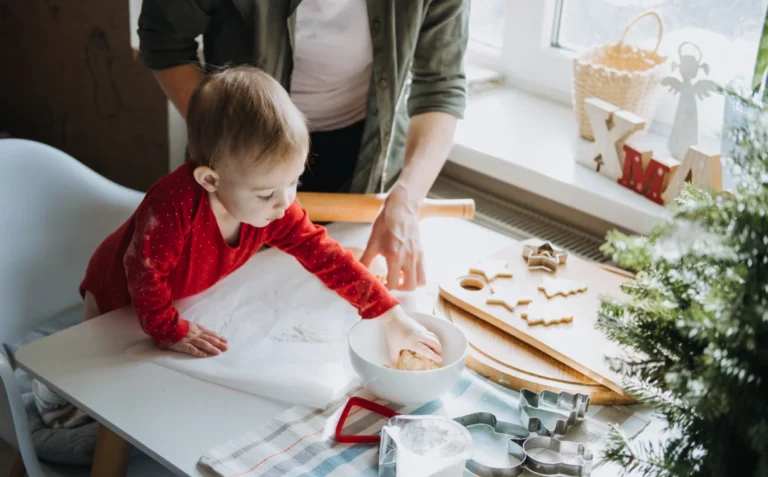
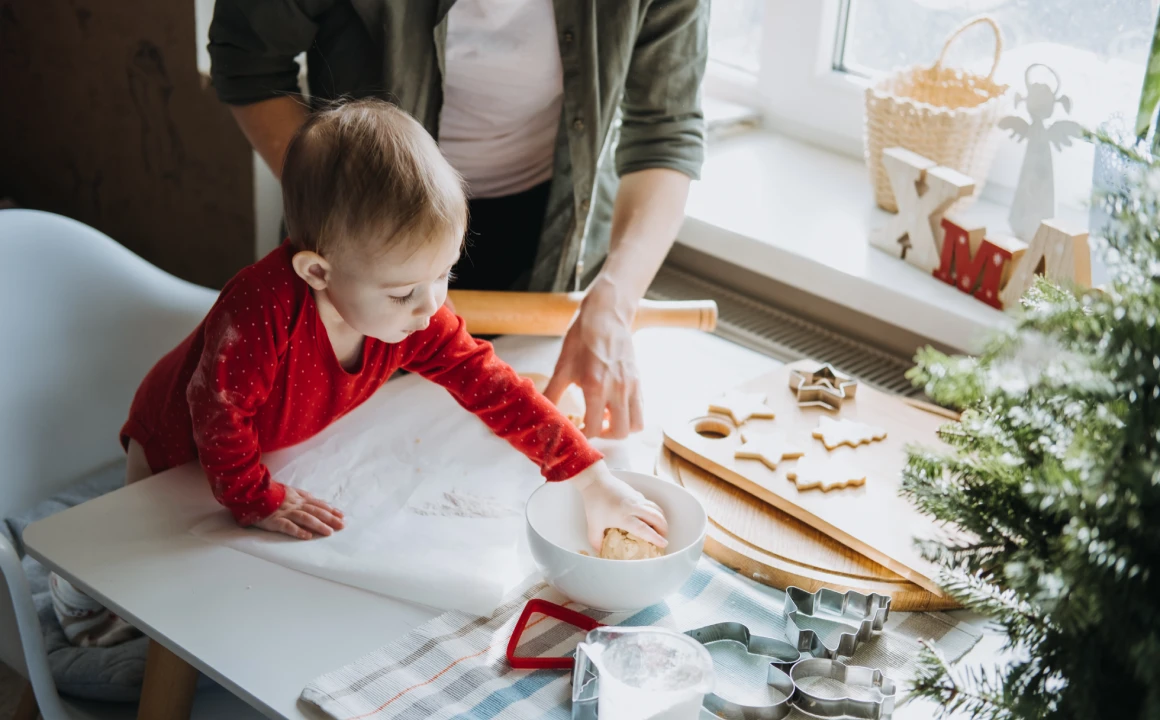
When your baby is still very young, you can enjoy baking while they watch from a safe distance. As they become toddlers, they can help with simple tasks such as stirring ingredients, pressing cookie cutters into dough or decorating biscuits with age-appropriate toppings.
As they get older, let them choose a favourite Christmas recipe and help prepare it from beginning to end.
You could even make one special recipe your family’s signature Christmas treat.
Perhaps gingerbread cookies, cinnamon biscuits or a traditional family cake?
Another lovely idea is to bake extra treats and deliver them to neighbours, grandparents or friends. This is also a wonderful opportunity to teach children about kindness and sharing.
And why not make Christmas morning even more exciting with a special festive breakfast? Christmas pancakes decorated with fruit, yoghurt or other favourite toppings can turn an ordinary breakfast into a little celebration. Older children will love helping with the decorations, while younger ones can enjoy age-appropriate portions.
Get inspired by our recipe for Magical Christmas Pancakes for Kids: Breakfast & Dessert Fun.
Another lovely baking tradition is preparing a special Christmas loaf that the whole family can enjoy throughout December. The smell of dried fruits, nuts and warm spices filling the kitchen is enough to make any home feel Christmassy.
Try our Moist Christmas Loaf with Dried Fruits & Nuts for a delicious festive baking idea that could become a family favourite.
6. Make Christmas Music Part of Your Family Life
Christmas music has a special way of bringing people together.
Start playing your favourite Christmas songs at home during December. Sing along while decorating the tree, dancing around the living room or preparing Christmas dinner.
Babies often enjoy music, rhythm and familiar voices. Your little one may not understand the lyrics, but they can still enjoy the sounds and happy atmosphere.
As your child grows, introduce a few songs that become your family’s Christmas favourites.
You could even have a little Christmas dance party every year!
And if your child enjoys singing, consider making it a tradition to learn one new Christmas song together each December.
Music is more than just a lovely part of the festive atmosphere. It can also support your child’s early development. Singing together, listening to familiar melodies and moving to a rhythm can encourage listening skills, language development and emotional connection.
If you would like to discover more about the benefits of music during childhood, read our article How Music Builds the Brain.
Years later, hearing those familiar songs may bring back memories of dancing in the living room, singing together and enjoying the excitement of Christmas.
7. Take an Annual Christmas Family Photograph
Children grow incredibly quickly. One minute they are tiny babies, and the next they are running around the house, asking how many days are left until Christmas!
That is why taking an annual Christmas photograph is such a wonderful tradition.
Choose a special day in December and take a family picture in front of the Christmas tree.
You don’t need professional photography or matching outfits. Sometimes the most beautiful photographs are the ones that capture real family moments.
You could:
- Take the picture in the same place every year.
- Wear matching or coordinated Christmas pyjamas.
- Include your child’s favourite Christmas toy.
- Use the same Christmas decoration as a photo prop.
- Create a family photo album with one picture from every year.
As your children grow, you will love looking back at how much everyone has changed.
It is a simple tradition, but one that becomes more valuable with every passing Christmas.
8. Make Giving and Kindness Part of Christmas
Christmas is not only about presents, decorations and delicious food. It is also a wonderful opportunity to teach children about kindness, generosity and caring for others.
You can introduce this tradition from the very beginning, even when your baby is too young to understand.
For example, you could make a family habit of donating toys, books or clothes that are still in good condition.
As your child grows, involve them in choosing a toy for a charity collection, making Christmas cards for elderly relatives or helping prepare a small gift for someone who might be lonely.
You could also:
- Donate food to a local food bank.
- Visit someone who may be spending Christmas alone.
- Make homemade gifts for family members.
- Prepare small treats for neighbours.
- Support a local charity during the festive season.
These small actions help children understand that Christmas is about more than receiving presents.
It is about making others feel loved, included and remembered.
9. Create a Christmas Light Adventure
One of the simplest and most exciting Christmas traditions is going out together to admire the Christmas lights.
When your baby is small, bundle them up warmly in the pram and enjoy a peaceful evening walk around your neighbourhood.
As your child grows, make it a special family outing. Look for decorated houses, glowing Christmas trees and festive displays.
You could even turn it into a little game:
- Who can spot the biggest Christmas tree?
- How many reindeer can you find?
- Which house has the most colourful lights?
- Can you find a snowman?
Finish the evening with a cosy drink or a festive treat when you get home.
This is an easy, inexpensive tradition that can become one of your family’s favourite December activities.
10. Let Your Child Choose a New Christmas Tradition
As your baby becomes a toddler and eventually a school-aged child, their personality and interests will begin to shine.
They may love crafts, baking, music, outdoor adventures or storytelling.
This is the perfect time to let them have a say in your family Christmas traditions.
Perhaps they want to choose the Christmas tree decoration, prepare a special breakfast, make homemade gifts or pick the Christmas Eve film.
Give them the opportunity to suggest one new activity every year.
Some ideas may become permanent family traditions, while others may only last a season. And that is perfectly fine!
The most important thing is that your children feel involved and that Christmas becomes something you create together as a family.
11. Keep a Christmas Memory Book
If you love keeping memories, a Christmas memory book is a beautiful tradition to start when your child is a baby.
Choose a notebook, scrapbook or photo album and dedicate it to your family’s Christmas celebrations.
Every year, add a few special things:
- A family Christmas photograph.
- Your child’s age and favourite things.
- A handwritten Christmas wish.
- Their favourite present.
- A drawing or handmade Christmas card.
- A little note about something funny or memorable that happened.
When your child is old enough, let them contribute their own drawings and messages.
You could even ask the same question every year: “What was your favourite thing about Christmas?”
The answers will change as your child grows, making the book even more special.
One day, you will have a collection of Christmas memories that tells the story of your family through the years.
Christmas Traditions Grow Along With Your Children
One of the most beautiful things about family Christmas traditions is that they evolve.
What starts as a simple activity with your baby can become something your whole family looks forward to every year.
Here is how some traditions might develop over time:
Baby’s first Christmas (0–12 months)
Focus on simple experiences: Christmas lights, soft festive music, cuddles, family photographs, keepsake ornaments and bedtime stories.
The toddler years (1–3 years)
Introduce simple crafts, Christmas songs, decorating biscuits, festive walks and choosing a Christmas ornament.
The preschool years (3–5 years)
Get creative with homemade decorations, Christmas Eve boxes, baking, family games and little acts of kindness.
School-age children (6+ years)
Involve them in planning Christmas activities, making gifts, decorating the house, preparing family recipes and creating their own Christmas traditions.
Remember that every child develops differently. There is no perfect age to introduce a tradition. Follow your child’s interests, keep activities age-appropriate and enjoy the moments together.
The Most Important Christmas Tradition: Spending Time Together
When we think about Christmas, it is easy to focus on making everything perfect. We want the beautiful decorations, the perfect presents, the delicious food and the magical atmosphere.
But when you look back years later, it probably won’t be the expensive gifts or perfectly decorated tree that you remember most.
It will be the little things.
The laughter while decorating biscuits. The Christmas songs playing in the background. The tiny hand reaching for a sparkling ornament. The excitement of opening a Christmas Eve box. The family photographs that show just how much everyone has grown.
Your baby doesn’t need a perfect Christmas. They need love, warmth, comfort and the people who make them feel safe and happy.
So start small. Choose one or two traditions that feel meaningful to your family. Repeat them, enjoy them and allow them to grow naturally as your children grow.
Because the magic of Christmas isn’t found in how much you do. It is found in the memories you create together.
And one day, your children may carry those same traditions into their own families, creating a little Christmas magic for the next generation.
That is the real beauty of Christmas traditions: they don’t just make the holidays special. They become part of your family’s story.
by Erika Barabás