The Stork and the Magic of New Beginnings

Cradle of Nutrition
- 5 minutes read
Last updated: September 2026
Stork Symbolism and Meaning
From ancient mythology to modern folklore, the stork has become a powerful symbol of birth, new beginnings, family, and renewal. But what does the stork symbolize, and why has this elegant bird become so closely associated with the arrival of babies?
Across European traditions and cultures, stork symbolism has been connected with fertility, family, good fortune, and the cycle of life. Let’s explore the meaning behind the stork, from the famous baby-bringer legend to the myths and traditions that shaped its symbolism.
What Does the Stork Symbolize?
The stork is commonly associated with several powerful ideas:
- Birth: The stork is perhaps best known as a symbol of the arrival of a new baby.
- New beginnings: Its return each spring has helped connect the stork with renewal and fresh starts.
- Fertility: In European folklore, the stork has long been associated with fertility and the hope of having children.
- Family: The stork’s connection with nesting and raising young has made it a symbol of family and parenthood.
- Hope: The image of a stork arriving with a baby represents anticipation, joy, and hope for the future.
- Renewal: Its seasonal migration and return are often associated with the renewal of nature and the cycle of life.
Together, these meanings help explain why the stork has remained such an enduring symbol of birth and new beginnings.
Stork Symbolism in European Folklore: The Baby Bringer
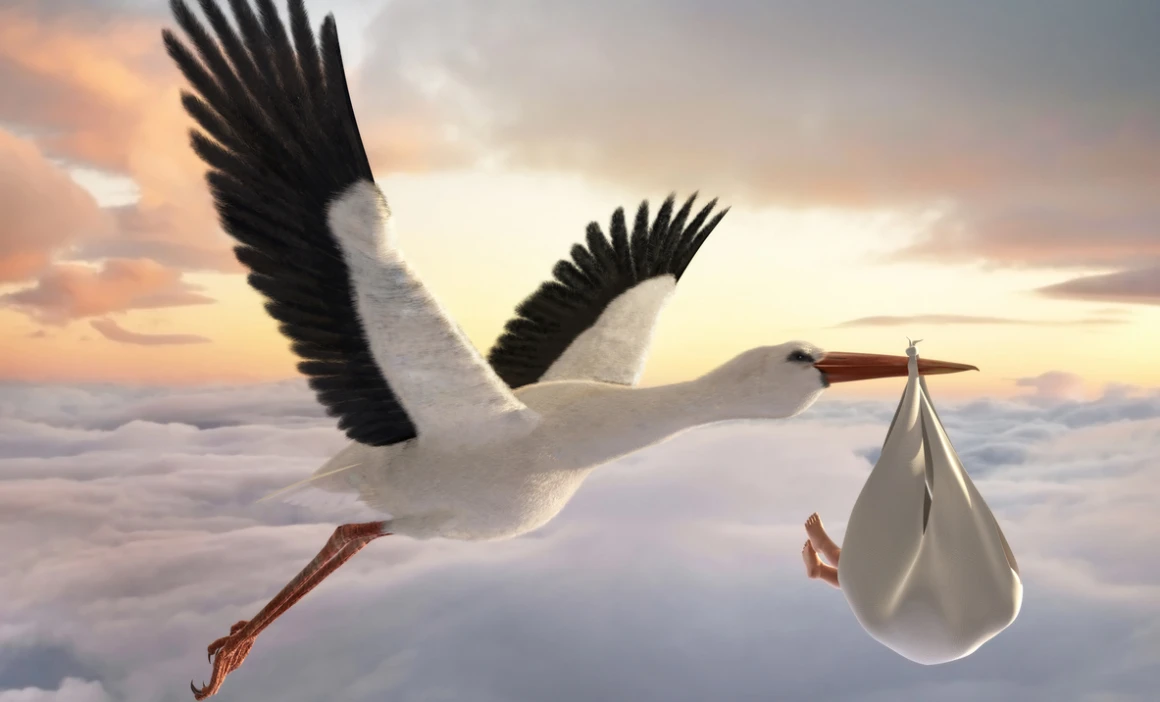
In many parts of Europe, especially in countries like Germany, the Netherlands, and Scandinavia, the stork became closely associated with the arrival of babies. According to folklore, these elegant birds were believed to deliver babies to families, carrying them in bundles to eagerly awaiting parents.
The stork’s annual migration may have helped strengthen this association with new life. Each spring, storks returned to Europe, coinciding with warmer weather and the renewal of nature. Over time, this seasonal return became part of the bird’s wider symbolism of birth, renewal, and new beginnings.
In some versions of the tale, the stork would bless the homes it visited, particularly those of couples hoping to have children. With its graceful flight and association with nesting and raising young, the stork became a symbol of fertility, family, and parenthood.
The Stork in Ancient Greek Tradition
Storks were familiar birds in the ancient Mediterranean world and appear in classical stories and cultural traditions. Their behavior, including their seasonal movements and association with nesting, helped contribute to ideas about family, care, and the continuation of life.
Rather than being tied exclusively to one deity or a single birth myth, the stork’s symbolism developed through the way people observed the bird and its relationship with its young. Its return to familiar nesting areas and its care of offspring made it a natural symbol of family and continuity.
These associations later became part of the broader symbolism surrounding birth, fertility, and new generations.
Norse and Germanic Traditions: Storks and New Life
In northern European traditions, the seasonal return of storks was associated with the arrival of spring and the renewal of nature. As the birds returned to their nesting areas, their presence could be seen as a hopeful sign of warmer weather and new life.
In German folklore, storks were especially associated with homes and families. Stories about storks nesting on rooftops helped strengthen their connection with good fortune, family life, and the arrival of children.
These traditions helped establish the stork as one of the most recognizable symbols of birth and new beginnings in European culture.
Storks in Africa and Asia: Different Cultural Meanings
The symbolism of storks is not limited to birth. In different cultures, stork-like birds and related species have been associated with qualities such as longevity, vitality, good fortune, and harmony with nature.
In Chinese culture, the crane is particularly well known as a symbol of longevity and good fortune. Although cranes and storks are different birds, they are sometimes confused in popular discussions of bird symbolism. This distinction is important when exploring cultural traditions.
The broader lesson is that birds associated with long life, seasonal movement, and family life can take on different symbolic meanings depending on the culture and tradition.
The Stork in Modern Culture: A Whimsical Tradition
Today, the stork continues to capture the imagination of people worldwide. It appears in cartoons, children’s stories, nursery decorations, baby announcements, and other imagery connected with birth. For families welcoming a newborn, these traditions can also become part of the special moments shared between parents, grandparents, and a new baby.
While few people literally believe that storks deliver babies, the image of a stork carrying a newborn remains a playful and recognizable symbol of birth. It turns the arrival of a baby into a whimsical story filled with wonder and anticipation.
The stork’s enduring appeal comes from its association with innocence, family, and the magic of new life. It remains a familiar symbol passed down through generations.
The Stork as a Metaphor: Hope and Continuity
More than just a bird in a folktale, the stork has come to represent renewal, hope, and continuity. Its seasonal return can be seen as a reminder that nature moves through cycles of change, growth, and renewal.
As a symbol, the stork can therefore represent families growing, new chapters beginning, and hope for the future. Whether it appears in a traditional story or modern baby imagery, the stork continues to represent the joy and anticipation surrounding new life.
Why Is the Stork Associated With Babies?
The connection between storks and babies developed through a combination of folklore, seasonal migration, and observations of the birds’ nesting behavior.
Storks return to many parts of Europe in spring, a season traditionally associated with renewal and new life. Their tendency to nest near human settlements also made them familiar and visible to communities.
Over generations, these natural observations became woven into folklore. The result was the enduring story of the stork as a mysterious visitor who brings a new baby to a family.
Today, the story is best understood as a charming cultural tradition rather than a literal belief.
Final Thoughts: The Enduring Symbolism of the Stork
From European folklore to modern baby imagery, the stork remains a powerful symbol of birth, family, hope, and new beginnings.
Its story has changed across generations, but the central idea remains remarkably consistent: the arrival of new life brings joy, anticipation, and the promise of a new chapter.
Whether viewed through folklore, symbolism, or modern culture, the stork continues to remind us of the wonder of new beginnings and the enduring importance of family.
By Erika Barabás
Sources:
- Arthur Cotterell: The Encyclopedia of Mythology: Classical, Celtic, Norse, 2004, Peter Bedrick Books
- David Leeming: The Oxford Companion to World Mythology, 2005, Oxford University Press