Sun Safety for Newborns and Babies: Essential Guidelines Every Parent Should Know

Cradle of Nutrition
- 3 minutes read
Protecting your newborn from the sun is not just about comfort—it’s a critical health priority. Sun safety for newborns is essential from the very first days of life, as babies have delicate skin and an immature ability to regulate body temperature. This makes them far more vulnerable to sunburn and overheating than adults.
Sun safety for newborns is one of the most important topics for new parents, especially during warmer months or in sunny climates. Newborn babies are extremely sensitive to heat and UV radiation, and understanding how to protect your baby from sun exposure, overheating, and related risks—such as heatstroke in cars or direct sunlight outdoors—can help prevent serious health issues and keep your baby safe and comfortable.
Leading health authorities such as the World Health Organization (WHO), NHS, and the American Academy of Pediatrics (AAP) all emphasize the same core message: sun protection for newborns must focus on avoidance, not exposure.
Why Sun Safety Matters for Newborns
A newborn’s skin is thinner and contains very little melanin, the pigment that helps protect against harmful UV rays. Even short periods of sun exposure can lead to:
- Sunburn
- Dehydration
- Overheating
- Increased long-term risk of skin cancer
According to expert guidance from the WHO and AAP, the first months of life are especially sensitive, making prevention essential.
Sun Safety for Newborns (0–6 Months)
1. Avoid Direct Sunlight Completely
Babies under 6 months should be kept out of direct sunlight at all times, especially during peak UV hours (11:00–15:00).
2. Use Shade as Your Primary Protection
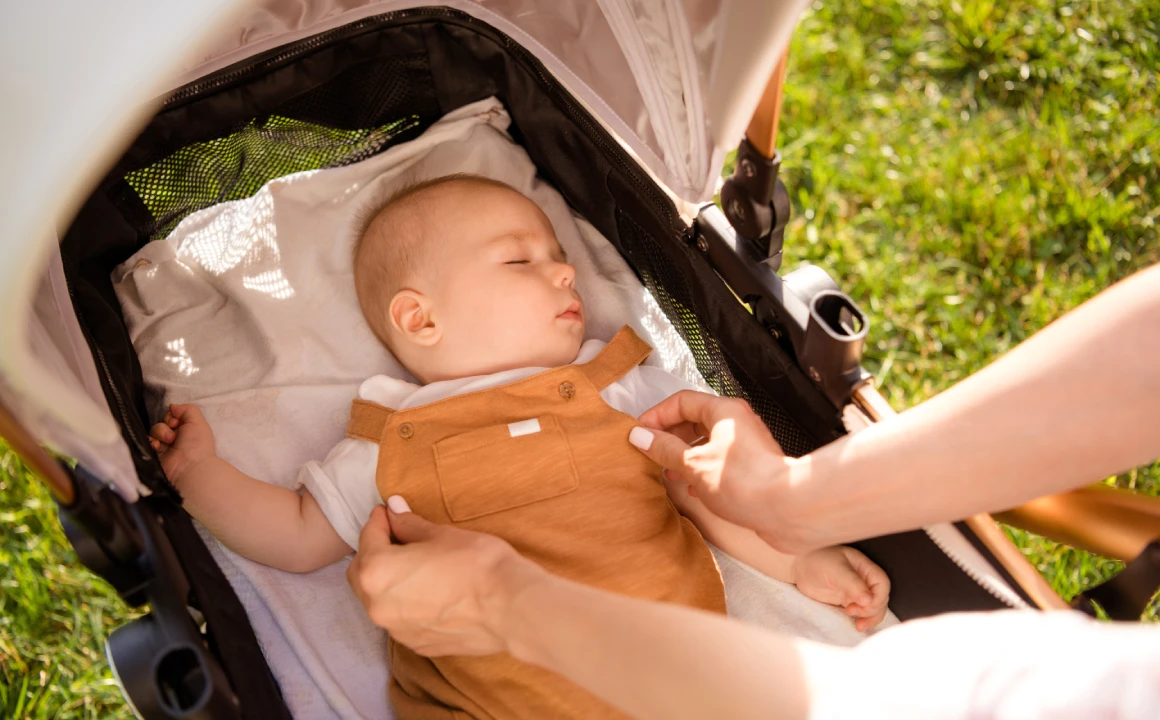
- Stroller sun canopy or parasol
- Tree shade or covered areas outdoors
- UV-protective covers (ensure airflow is maintained)
3. Dress for Protection
- Lightweight, long-sleeved clothing
- Breathable fabrics like cotton
- Wide-brimmed hat covering face, neck, and ears
4. Be Careful with Blankets Over Strollers
Covering a stroller with a blanket can trap heat and significantly increase the temperature inside, raising the risk of overheating.
5. Sunscreen Use (Limited Situations Only)
Most guidelines recommend avoiding sunscreen for babies under 6 months.
However, the AAP allows small amounts on exposed skin if adequate shade and clothing are not available.
Sun Safety for Babies (6 Months and Older)
As babies grow, sun protection expands to include sunscreen:
- Use SPF 30 or higher (broad-spectrum UVA/UVB)
- Apply 15–30 minutes before going outside
- Reapply every 2 hours or after water exposure
Even with sunscreen, shade and clothing remain the first line of defense.
Car Safety: A Critical Part of Heat Protection
Sun safety doesn’t stop when you get in the car.
Never Leave a Baby Alone in a Car
This is a strict safety rule supported by organizations like the American Academy of Pediatrics and traffic safety authorities worldwide:
- Not for a minute
- Not with windows open
- Not in mild weather
Cars can heat up rapidly, even when it doesn’t feel hot outside. This can lead to heatstroke, a life-threatening condition that develops quickly in infants.
Safe Car Practices
- Always take your baby with you when leaving the car
- Use sunshades on windows
- Dress your baby lightly during car rides
- Check the back seat before locking the car
Simple Rules to Remember
- No direct sun for newborns
- Shade and clothing first, sunscreen second
- Never leave a baby alone in a car
- Keep your baby cool, hydrated, and protected at all times
Sun safety for newborns is about prevention, awareness, and consistency. As your baby grows, their needs and routines will change throughout the first year. To learn more about each stage, explore our guide to your baby’s first year of development.
by Erika Barabás