FAQ About Pregnancy Nutrition: Your Essential Guide to Eating Right
Cradle of Nutrition
- 3 minutes read
Pregnancy nutrition plays a crucial role in supporting both maternal health and fetal development. A well-balanced prenatal diet helps ensure proper growth, reduces complications, and supports energy levels throughout pregnancy. This guide answers key questions about pregnancy nutrition, highlights essential nutrients, and provides practical dietary advice for expectant mothers.
Essential Nutrients in Pregnancy
A healthy pregnancy diet focuses on nutrient-dense foods that support baby development and maintain maternal well-being. The most important nutrients during pregnancy include folic acid, iron, calcium, and DHA.
Folic Acid (Folate)
Folic acid is essential in early pregnancy as it helps prevent neural tube defects in the baby’s brain and spine.
- Role: Supports early fetal brain and spinal cord development
- Food sources: Leafy greens (spinach, kale), citrus fruits, beans, fortified cereals
- Tip: Many healthcare providers recommend prenatal supplements containing folic acid
Iron
Iron supports increased blood volume during pregnancy and helps prevent anemia.
- Role: Supports oxygen transport for mother and baby
- Food sources: Lean red meat, lentils, tofu, spinach, fortified grains
- Tip: Pair iron-rich foods with vitamin C sources (like oranges) to enhance absorption
Calcium
Calcium is essential for building the baby’s bones and teeth.
- Role: Supports skeletal development and maternal bone health
- Food sources: Dairy products, fortified plant milks, almonds, broccoli
- Tip: Aim for consistent daily intake rather than large single doses
DHA (Omega-3 Fatty Acid)
DHA supports brain and eye development in the fetus.
- Role: Critical for fetal brain and nervous system development
- Food sources: Salmon, sardines, chia seeds, walnuts
- Tip: Low-mercury fish are the safest options during pregnancy
Dietary Restrictions for Expectant Mothers
Certain foods should be limited or avoided during pregnancy to reduce the risk of foodborne illness and complications.
Raw or Undercooked Foods
- Avoid: Raw fish (sushi), raw eggs, undercooked meat
- Reason: Risk of harmful bacteria like Salmonella and parasites such as Toxoplasma
- Alternatives: Fully cooked fish, pasteurized egg products, well-done meats
High-Mercury Fish
- Avoid: Shark, swordfish, king mackerel
- Reason: Mercury can affect fetal brain development
- Alternatives: Salmon, cod, trout, shrimp
Unpasteurized Dairy Products
- Avoid: Soft cheeses made from raw milk
- Reason: Risk of Listeria infection
- Alternatives: Pasteurized cheese and dairy products
Processed and Deli Meats
- Avoid or limit: Hot dogs, deli meats unless heated thoroughly
- Reason: Possible Listeria contamination
- Alternatives: Freshly cooked meats, homemade sandwiches
Healthy Eating Tips for Pregnant Women
Maintaining a balanced prenatal diet doesn’t have to be complicated. Small, consistent habits make a big difference.
Meal Planning Strategies
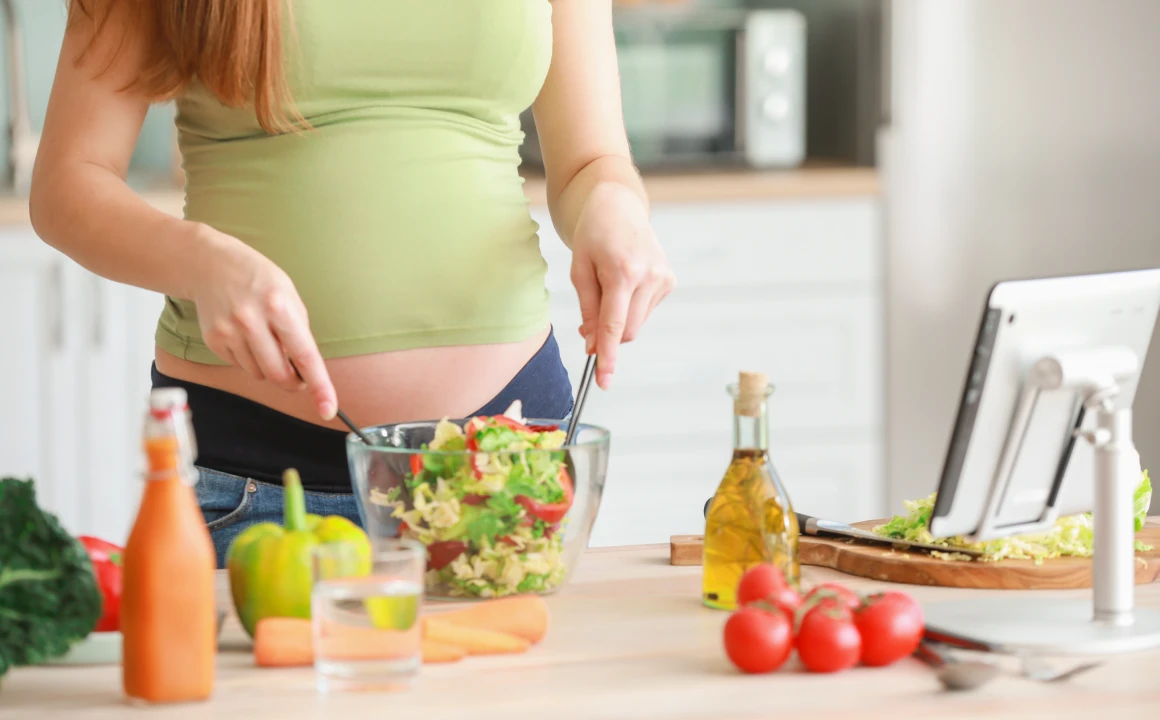
- Build meals around protein, whole grains, healthy fats, and vegetables
- Prepare weekly meal plans to reduce stress and ensure nutrient balance
- Include a variety of colorful fruits and vegetables daily
Healthy Snack Options
- Greek yogurt with berries
- Apple slices with peanut butter
- Whole-grain crackers with cheese
- Nuts and dried fruit mix
- Hummus with carrots or cucumber
Hydration Matters
Water supports amniotic fluid levels, digestion, and circulation.
- Aim for regular water intake throughout the day
- Include hydrating foods like watermelon and cucumbers
- Limit sugary drinks and excessive caffeine
Mindful Eating
- Eat slowly and listen to hunger cues
- Avoid skipping meals to maintain stable blood sugar levels
- Choose smaller, more frequent meals if experiencing nausea
Addressing Common Pregnancy Nutrition FAQs
Can I drink caffeine during pregnancy?
Yes, but in moderation. Most health guidelines suggest limiting caffeine to about 200 mg per day. Excessive caffeine intake may increase the risk of low birth weight.
Do I need to eat for two?
No. Pregnancy does not require doubling food intake. Instead, focus on nutrient-dense foods and a slight increase in calories during the second and third trimesters.
Are cravings normal?
Yes, food cravings are common due to hormonal changes. However, it’s important to maintain a balanced diet and avoid relying on unhealthy options.
Is it safe to take prenatal vitamins instead of eating well?
Prenatal vitamins help fill nutritional gaps but should not replace a healthy diet. Whole foods provide fiber and additional nutrients essential for pregnancy health.
What foods help with morning sickness?
Ginger, crackers, bananas, and small frequent meals may help reduce nausea symptoms.
For personalized guidance, always consult a healthcare provider or registered dietitian.
Related Articles You May Find Helpful
- Staying active during pregnancy
- Placental health in pregnancy
- Gestational diabetes and nutrition during pregnancy
- High blood pressure during pregnancy: risks and management
Sources:
WHO Pregnancy Nutrition Guidance
ACOG Pregnancy Nutrition Recommendations
by Erika Barabás